Showing posts with label H. Assignment 7. SIngle Camera Shots. Show all posts
Showing posts with label H. Assignment 7. SIngle Camera Shots. Show all posts
Wednesday, 11 May 2016
Pre - production paperwork - Diamond Day
The script.
Pre-production paper work - Part 1:
Pre-production paper work - Part 2
<

Wednesday, 23 March 2016
Research on Diamond Day
Themes
There are many themes surrounding the idea of Diamond Day, one of the key ones is the idea of criminal behavior, mainly aimed at this idea reflected in a gangsta's lifestyle. The MOB life, the dangers that can occur when you mess with dangerous people in the business. This can be linked to themes within the film Snatch. (2000) a Russian gangsta and two incompetent amateur robbers, the theme of defying someone with great power over society. Showing the situations that can occur when you involve yourself with people in this type of lifestyle. A theme of dark humor can be portrayed through the events that happen, it can be based on actual events that happen in day to day life.Another theme that we would like to include is the theme of friendship, in Diamond Day there are two men who seem to get themselves in a pickle, accidentally stealing from a Big Boss and not realizing what they have done, until they come face to face with the effects of their actions. They are in it together and have a clear bond when they made the same mistake, they need each other in order to achieve the task set by the boss to repay their debt. Similarly to the friendship between the main two protagonists in the film Bad Boys 2 (2003) They are placed in a difficult situation and they need each other. We would like to portray this theme and add some comical element to it because it keeps the characters down to earth and the audience can relate to a friendship they may have with a friend, even if they are not criminals.
Diamond day takes inspiration from many different gangster films, for example Snatch (2000, Guy Richie), London Boulevard (2010, William Monahan) and Kiss Kiss Bang Bang (2005, Shane Black).
First of all the short will most likely resemble Snatch and other Guy Richie films with it being British gangster comedy. Much of the humour will emulate that of Guy Richie films with it being dark and satirical. Below is the trailer for snatch.
Another Guy Richie film that I took inspiration from is RocknRolla (2008, Guy Richie). Again the film appeals to a similar demographic and also focusing on a small group of criminals trying to make it big. Like many of Guy Richie's films there is comedy through out in the form of us the audience laughing at the predicaments the protagonists get into. Such an example can be seen here from RocknRolla (2008, Guy Richie).
We also see in this clip the idea of a criminal duo, friends who work together committing crimes to make money. This was an idea I wanted to use in Diamond day, and so the idea of Graham and Paddy developed.
Another film I took inspiration from is London Boulevard (2010, William Monahan) This also tells the story of a criminal protagonist under the thumb of a criminal king pin, this was also an idea I wanted to explore, an omnipotent criminal that control our protagonists.
Here is a clip below.
Lastly Kiss Kiss Bang Bang (2005, Shane Black) which explores the idea of an amateur criminal getting entangled in the criminal underworld and more importantly with a criminal boss. This film is American and is perhaps more of a noir, however still implements the elements of humour I wanted to in Diamond Day.
Linking to Society.
 |
| http://www.nydailynews.com/new-york/nyc-crime/30-mobsters- nabbed-connection-italian-mafia-article-1.1609347 |
 |
| http://www.imdb.com/title/tt1827163/?ref_=ttmd_md_nm |
Locations
When considering the location of the film I knew I needed to feature an area that was secluded, somewhere that the audience would believe a criminal deal would take place. The place I immediately thought of Fritton woods. Having been there many times I am familiar with the area and believe it would offer some great shots for the short. Here are some examples of locations that could possibly be used in the short. Specifically the opening seen when see the two protagonists entering the forest, and the opening in which the deal takes place.
After reading the script it was evident that we needed the correct location in order to make it look cinematic and create the desired atmosphere. The location is very important for us as we need to find a place to make it look believable and also somewhere where we will be allowed to film with guns. Due to the majority of the film being shot within the woods as well we need to make sure that it is close by so we can access it easily and that will also mean that we can go backwards and forwards to allow us to have a lot of time there.
As you can see above forests look really nice due to the warm colours and shadows that are created. We will be filming this in April as well so the leaves will be nice colours and the shadows will look great on the protagonists to create that eerie, mysterious look.
As well as a forest we need a room where some of the characters will meet and have a conversation that will lead to the action that takes place later on in the film. This room needs to have a look that is once again believable and that will fit into the style of the film we are trying to create. We want to try and avoid using the college as it's an environment that is seen every day and not very aesthetically pleasing. We need a location that will fit 4 people in and where we will have time to shoot some lengthy conversations and still make it look nice. This could be done in a house with some lighting - that's our best option.
Above there is a helpful video of how we can film this dialogue and shows what we need in order to make it look good. By filming in a spacious house we are more than able to do this and will be possible.
Friday, 12 February 2016
Single Camera Production Techniques
Single Camera Techniques
In this essay I will cover the techniques that aid a single camera production, I will explain in detail how the techniques work and how they can differ from a multi-camera production. A single camera production is when a TV show or a film is produced using one single camera to capture the footage, an example of this is in the film Drive (2011) and in the TV series Scrubs (2001). Where as a multi-camera production is the use of two or more cameras at one time when filming a TV series or film, multi-camera tends to be used more for TV programmes than films as the action and stories to cover in a TV series would be impossible with one camera, where with multi-camera filming can be completed more quickly for a weekly deadline of episodes. An example of a multi-camera TV series is EastEnders (1985) which is a weekly demanding programme.Camera
One of the first techniques to cover is the camera itself, in a single camera production there is use of one camera. The purpose of this single camera is to be the predominant mechanism to get the audience engaged with the story and in a sense 'into the scene'. With the single camera there is opportunity for the audience to interpret the story-line in their own opinions, as it is easier to maneuver, it gives a greater perspective from different sides of a story. There are occasions on films where there is more than one camera in use, however usually due to the action packed demand of the scene, where is lots of different story lines in one, or to cover an action shot that is fast paced and shows all aspects. Evidence to show this is through the single camera production of a feature film; The Great Gatsby (2013) because there is many stories being told in The Great Gatsby and perspectives from all characters being shown to the audience, single camera was effective by being able to capture this with keeping the footage realistic, below is an example from the film:

 |
| http://www.imdb.com/title/tt1343092/?ref_=nv_sr_1 |
 |
| Single camera production set-up |
 |
| Multi-camera production set-up |
This is a multi-camera set up, as you can see these camera's limit the space there is for sets and scenes, this is why sit-com's like Friends is studio based and usually focuses on the apartment they are based in. These camera's also have to watch that they do not capture each other when filming commences.
Lighting
The lighting becomes an important technique when filming with single camera, it allows far more control because you can light each shot individually. There are parts in films where you can get a character to walk into a certain position so that they step into or out of light and then say their line. Not only does it make the scene more dramatic but also more intimate with the audience because that light can reflect a certain feeling or atmosphere to the scene. Lighting using a single camera is complicated because it's adjusting to the specific shot and there is more consideration that goes into lighting a single camera production. An example of a film that is a single camera production and tells the story through the use of lighting is the film Drive (2011).

 |
| https://www.youtube.com/watch?v=CWX34ShfcsE |
 Here is the basic set up for a low key lighting shot with a single camera, the same set-up used for the images above. As every shot in single camera is set up individually you can see how the lighting is easy to control and move around, the complications come with what kind of lighting and what mood you want to reflect in any specific scene.
Sound
 When filming with a single camera you cannot always rely on the mic from that camera to be adequate at picking up vital dialogue as they usually pick up background noise, which interferes with the dialogue. This is why additional tool can be used when filming, an audio device that can be plugged into the single camera to pick up specific dialogue within the scene and drown out any ambient noise, these are called boom mic's. Often in a single camera productions there will be a second camera predominately use to capture certain scenes or shots with a large amount of dialogue, in a sense a 'back up' to the main single camera. Sound effects can be and usually are added in the editing stage to enhance or create a certain feel to the scenes atmosphere, this means it is important to note that not all dialogue used in a scene that you see, is from that actual take, it could have been recorded after shooting if there was a need to strengthen the dialogue in that scene. Sound in a single camera production is more flexible in regards to post production, there is most likely to be multiple takes of scenes and shots, which means during this time the editor will have a variety of takes to work with on the sounds (may include dialogue, ambient noise or Foley sounds). This gives the editor a chance to combined the best audio with the best footage and make sure it links together, the shots that are filmed with single camera often require a certain amount of overlay which means begin filming a little earlier and ending a little later to make sure there is no mishaps when it comes to combining the footage with the audio, it also gives the editor more to work with.
In comparison to multi-camera which is mostly used on sit-comes, they often mic the characters individually to pick up clearer dialogue, especially with multiple cameras picking up different intensity of audio it can be harder to edit sound into each piece of footage that each camera picks up. Like a single camera when using audio devices like a boom mic, it can be complex in multi-camera productions as they are sometimes visible within the scene, an example of this is in The Jeremy Kyle Show, which is a multi-camera TV show.
 Here is an example where the one camera captures another camera in a multi-camera set up, also the boom mic would be visible in a set up like this. Which is a result to of why films usually stick to using single camera's because it can show more realism to a scene.
Editing

Single Camera Genres and Formats
There are specific formats that tend to be associated with single camera production, this is because the use of single camera compliments a format in which corresponds with the story they are trying to tell. One of the most known formats is a series, a series is a running of episodes which have the same characters in every episode, however a different story line within each of the episodes. Although there may be a background sub-plot which exists now and again throughout each episodes of a particular season. They may also be a focus on central characters through a particular season or selection of episodes, a good example of a serial is Criminal Minds (2005 - current) which is based on a FBI behavioural analysis unit, they tackle different stories/ crimes each episode it is about tackling a criminal case from a criminal mind perspective, looking at how and why these crimes have occurred, is a crime drama dominated genre. It is also commissioned for a certain amount of time, however this can change in regard to how successful the programme becomes.
Below shows an example of the set up of characters within a series, there are different series' where each character gets to play the main parts, also a set up of how the story move on from one another and if there is a recurring sub-theme embedded in a few of the episodes.
 |
| https://en.wikipedia.org/wiki/Criminal_Minds |

 |
| https://www.youtube.com/watch?v=FYGk1Ufhzdg |
 Another type of format associated with single camera production is serial, serial's may run for a specific period of time, like a series. However there is a type of serial which can go on forever, until they want to stop producing it, other than that they can just leave it open each episode. It consists of keeping the characters the same from one episode to another, however unlike a series, this story line develops throughout the on going episodes, (although you can get story arches in a series) a serial is where it is open for development across the episodes. As a result of a serial, soap operas are the most known for carrying on a developing story, there is a multi-strand narrative which means there is overlapping of stories within the episodes and often a way in which they link together, once a story has fully developed it will usually link into another story or situation, therefore it is never-ending. There is no main protagonist, which means there is usually no story that gets completely closed, allowing room for characters to leave and come back in future episodes with a different or binding story that was never resolved, even if it has been years later. These take a large amount of planning to predict ahead what will happen in future episodes and individually to each character.
 |
| https://en.wikipedia.org/wiki/Hollyoaks |
Another serial is EastEnders which has been continuous since 1985, and even Coronation Street since 1960, which is the longest running serial in the UK, 25 years before EastEnders. However these examples are both filmed in multi-camera, this is due to the weekly demand of the episodes and filming quick-time can be difficult to cover with a single camera set up.
The image on the above-right shows that the serial uses a single-camera set up, this is best when shooting serial's because they are not live, which gives the editor more time to play around with the footage captured. It also gets produced quickly which means the less equipment used to film with a single camera gives the directors a greater opportunity to get a broad range of shots done before the release of the next episode. Below is an example from the serial drama Hollyoaks, as you can see these shots are possible with a single camera set-up, they look authentic as if this conversation is actually happening and the audience are in the room or in the situation. This would not be possible with a multi-camera because the camera's would capture each other in the shot, which would withdraw the realism from the scene. The long life of a serial could be credited to multi-camera techniques as they can be produced quickly for the weekly release, capturing different sets at different times. However Brookside (1982-2003) is a good example of a single camera serial production which lasted for 21 years.

 |
| https://www.youtube.com/watch?v=AAjbGNVJ0EA |
A single drama is another format often associated with a single camera set up. A single drama is a one off story for TV purposes, it can often present a topical issue that is current. Often referred to as a self-contained story, and comparable to a TV movie. Some last from 5 minutes to an Hour and half, they present a story that gets straight to the point, they can sometimes run over two or three parts. An example of a single drama is the BBC's Toast(2010) , Below is the trailer for Toast, this single drama was about a nostalgic trip through heartfelt drama of cooking for acceptance, the main protagonist is Nigel, once his mother dies (who is hopeless at cooking) he is left with his distant father, there is a step mother which comes into the picture who is an amazing cook, poses as a rival to Nigel who is the only male in his cooking class at school. The competition begins to find a way to his fathers heart. Through finding love and acceptance for his sexuality, it is a compelling single drama with an underlining topical issue that is shown in this 1h 30mins showcase. Below is the trailer for the single drama.
This is one of the most known single dramas, however there is another which is significant and a won an award for The Best Single Drama 2015 and that was Marvellous (2014) which was also a topical issue which included a young man just born after WW2, with learning difficulties, trying to find himself a career, being independent and getting over the death of his mother. Single dramas use a single camera set up because like a serial and a series they are not filmed live, therefore they have to uphold an authentic theme throughout. They also don't take an extensive amount of time to produce, as a one off, they can use all materials once that do not need to be re-used for another series, only for re-takes would material need to be used, which there can be a lot of when using a single camera to make sure all the scene is captured. As it is referred to as a TV movie and most feature films use single camera, it is another reason why a single camera is more efficient when directing and capturing different perspectives of characters, especially on topical issues. In comparison to using multi-camera for a single drama which would take longer to move around the cameras to get specific shots, and for a small production this would cost more to run a variety of cameras, with such a low budget production, as single dramas do not have the same extensive budget as a feature film.
Genres
There are many genres that people associate with single camera productions, this could be because for some of the genres there is more intimacy and engagement needed from the audience, which is more likely to come from a single camera production because it is able to capture more difficult angles from characters perspectives. Although some are used for multi-camera production due to the turn-over of episodes and allowed time to film.
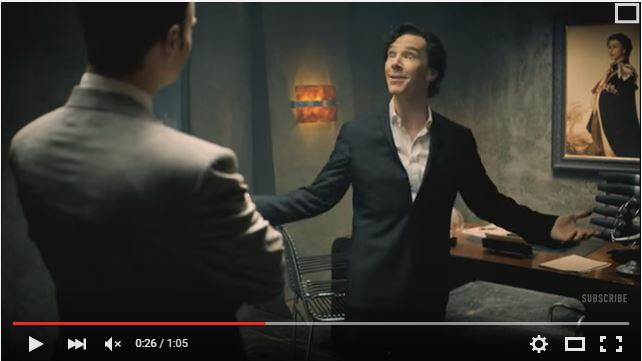
 A period drama is usually set in a specific area of the past and often romantic dramas but can also be adventurist or have the theme of a thriller drama. As it is usually based in the past, the props, costumes, backdrops, acting techniques are made to seem dated to that time, a good example of this is Jane Eyre(2011) based in 19th century England based upon a girl who is growing up and going out into the world to become a governess, tackling friendships and love affairs it is seen as drama packed genre. Single camera benefits this type of genre from the lighting flexibility you get with single camera as it is easier to control, as well as the camera angles, capturing all the emotion in the scenes from one single camera. In comparison to the use of a multi-camera which can make it seem staged, as if it is a live performance, taking away the authentic and dramatic feeling of the text. Further more crime dramas and thrillers focus more on the emotion of the characters, between the 'good' guy and the 'bad' guy, between authority and the criminal. Usually using low key lighting which is more stabilised when using a single camera as you can control each shot individually, this is seen in the TV series, crime drama, Sherlock(2010 -present) . Below is an example from the TV series, it is noticeable in each shot that the lighting has been shot individually to reflect the atmosphere in this particular scene, both shots in the same room, however from a serious shot which is darkened to and more light-hearted shot which is brighter on the characters face. This would not be possible in a multi-camera production because the different takes would be extremely difficult to control on the various different type of camera set ups, it would not have same effect, which is why period dramas are often produced using single camera.
 |
| https://www.youtube.com/watch?v=9UcR9iKArd0 |
 This also applies for the genre of Horror, single cameras are used to capture the realism of a scene, to create a personal connection with the audience and make them feel as if they are in the action. Also the action used in horror's are usually a battle off between the killer and the victim, which includes fast pace scenes. Single cameras are use more for these to capture different angles and play a part of both the killers side and the victims side. If a multi-camera were to be used, the cameras would capture each other and could also go against the 180 degree rule if not followed correctly, it is at greater risk. A good example of a Horror film that does this is Scream(1996) and also Saw(2004)
 |
| http://www.imdb.com/t itle/tt2372162/ |
Another genre is a soap opera, however this is mostly associated with a multi-camera production due to the rate of which the episodes need to be released, weekly, twice a week, or even more. Some soap operas are produced however with single camera as this keeps the authenticity in tact, especially with the drama that is captured in soap operas, and it is known that the best way to keep the audience intimate with what's occurring in the scene, is delivered through multi-camera. As mentioned previously in the Serial section of the post, there are many examples of soap operas that have lasted over 60 years, due to the episodes never fully giving the audience closure of a situation, a character either leaves with an open door to come back in the future. An example of this is a print screen below, stating of the characters that are returning to the soap opera.
 |
| http://www.eastendersultra.co.uk/cast-changes |
 |
| Single Camera Set up. |
Below is a video explaining the system used by a single camera set up, and how this set up allows the director to control each shot and let the shots and sound track tell the story, it also mentions the quadrant system which some directors favour when shooting with single camera as it is more organised and can have greater effect on the audience without them realising.
Single camera set up can also make the production feel more personal, allowing an intimate connection with the audience, to place the audience 'in the scene' or 'in the action'. Although continuity errors are often more frequent due to accounting for the different characters perspectives throughout the film. This could be seen as an advantage, as a single camera set up makes room for the possibilities of producing a master shot for each scene as well as individual angles. Footage can be shot in a collection even if not in order of the film, this results less time spent waiting for shots, for the cast and crew. Single camera is usually created on a tighter budget than multi-camera as less equipment to order and less money spent on constructing locations, with single camera there are many real locations as your disposal because of the less equipment used. However single camera productions usually run over-time, therefore can be more expensive to run due to the length of filming. Although not all films are shot single camera, a few may need a second camera to capture a different angle at the same time, and some movies are shot multi-camera due to the broad amount of action scenes that need extra coverage as some stunts can only be filmed once, for example an explosion.
 |
| Multi-camera set up. |
The alternative to shooting a moving image product is a Multi-camera production, this is where footage is shot on more than one or two cameras. Mostly used for live shows or to shoot soap operas, however for many different reasons. With a live show, multi-camera allows coverage of each position of the production, editing live, also called 'mixing' which is where the director calls for which camera to switch to, to get perspectives of all that are involved. Often used to shoot shows like X-Factor and Britain's Got Talent and the The Jeremy Kyle Show, which previously in the post has an example that these cameras usually capture each other in shot, which keeps the audience reminded, this is real, this is live. Therefore continuity errors are less frequent, as this is what keeps the 'live' authenticity in tact. As for soap operas, filming can be completed more quickly in the weekly release of episodes, as there are more single takes and fewer re-shoots, which results in a higher chance of being able to edit the footage in time, with more shots to choose from. Although unlike single camera the lighting can be difficult to manage, as there are multiple cameras, getting the lighting the exact same in each shot proves difficult. This reinforces the control the director has over the shots, which is very little compared to single camera, the amount of equipment usually needs more than one director, possibly co-directors or specific managers of one camera. The equipment also poses an issue when it comes to filming in locations, this is limited because of the amount of equipment needed to facilitate a multi-camera set up would not be easy to manuver from location to location. Overall there are different formats and types of media text which requires either the benefits of single camera or multi-camera, both have drawbacks, however it depends what type of shot you want to capture, this determines which one will be better for the production.
Friday, 5 February 2016
Research Texts - Multi-Camera and Single Camera Comparison
Friends: Season 1 EP 7 and Scrubs: Season 7 Ep 1

The TV shows Friends is a multi-camera production, we can see this due to the characters and the setting being stationary, this means there is more opportunity to use multiple cameras as they wont be in the way and capture each other. This also gives the opportunity to have multiple stories happening within one scene setting, in different parts of the location, due to the multiple cameras they can pick up, at the same time, what the characters situation is. In comparison to Scrubs which is a single camera production, as it was filmed in an actual location in a hospital, multi-cameras would limit this movement from location to location as the amount of equipment needed for multi-camera would take up too much space and restrict the maneuvers. There is also different shots in scrubs, exchanging from master shots to close ups and over the shoulder shots, this is indicative of a single camera production because it gives the director more opportunity to capture the different shots of one situation, therefore capturing a larger perspective of whats occurring in the scene. The TV sitcom Friends was shot weekly, using multi-camera acted as an advantage as there is very fewer re-shoots as there is a higher chance of being able to edit the footage with more options to choose from. Furthermore filming can be completed more quickly as there are more single takes, which reinforces the advantage of a multi-camera especially for a weekly TV show.


Monday, 1 February 2016
Research Texts
Silent Witness 'choices' Episode.

In the opening episode there is a drive by shoot out, targeting a local club. The use of a single camera is vital here due to this being an action scene the camera movements are fast pace and include close up and wide angles of those attending the club and those shooting at the club. If this was done with multiple cameras they would catch each other in the shot, a single camera gives the advantage of being able to show the whole scene from different perspectives which heightens the audiences engagement within the programme to see it from a range of angle and analyse exactly what is happening in the scene. The opening scene was set outside a nightclub, while bouncers were letting a queue of people into the club one by one. There is no sound of what's occurring in the scene but there is an over music track, this music corresponds with what is happening in the scene, the scene is in slow motion. Once the black vehicle appears the camera angle comes from the perception of what those in the car are seeing and what those at the club are seeing, this is why a single camera is important here as it is able to show both sides, unlike with multi camera where it would pick up each camera with the different angles. The characters in the opening scene included a male who arrives at the club with his suggested girl friend (we can assume because of the way they act towards each other in the car they approach the nightclub in), the girlfriend waves to another female character when approaching the club, this suggests that there is a familiarity with this club, they have been here before. Wearing a suit we can assume the male character from the car is an important character as well as he is the main character we first come into contact with in the opening scene. There is also extras which are outside the club, there is a close up of the bouncers, which could suggest significance as the episode progresses. The drive by shooting in the car includes characters, we can assume there is more than one person present as there is a driver and the gun comes from a character in the back, therefore the audience can suggest the car is full and could be a gang related conflict. As the episode progresses there are other factors which contribute to using a single character, when a character in a wheelchair, wheels forward to make a statement to another character, he hits an exact light to create a specific feel to the scene, this would not be able to be done with multi cameras because they would pick up a different light from a different point of view they were facing, this is why single camera can be argued to capture more emotion within a scene.
Edge of Darkness: Compassionate Leave.

In the opening scene is set in a conference hall, the detective is confronted by what we can assume as his chief detective. The chief is lecturing the detective about what he needs to focus on, and what his job is to take care of the current inquiries that are occurring. However the detective is arguing that this election fix is what his priority is to sort out, the chief stresses that there is no importance to focus on this because it was only a few votes that was included in the fix. The chief is asking the detective to delay the inquiry for two weeks, the detective does not think this is a priority to be focusing on. The use of single camera in the opening scene, in the conference hall, is effective because it can show a master shot of what the setting of the character are, then it can go over the shoulder of the chief and the detective. With a multi-camera this would be difficult because one camera would capture another if the wide shot and close ups were occurring at the same time. Another scene that can be considered indicative of a single camera production is where the shooting occurs, the female character, the detectives daughter walks into a particular light before she gets shot, therefore the audience can assume something is going to happen as they are focusing the light on that particular camera. This would not be doable with the use of multi-camera because there would be different shots, from different angles and the light would be in a different area of the character.
Subscribe to:
Posts (Atom)